
मटेरियल गाइड
मेटल मेश फ़साड: Open Area ऊष्मा-रोध प्रतिशत नहीं है
आर्किटेक्ट और कॉन्ट्रैक्टर के लिए Open Area, g-total, Fc, EN 14501, wind load और वियतनाम में architectural metal mesh facade RFQ की व्यावहारिक गाइड।
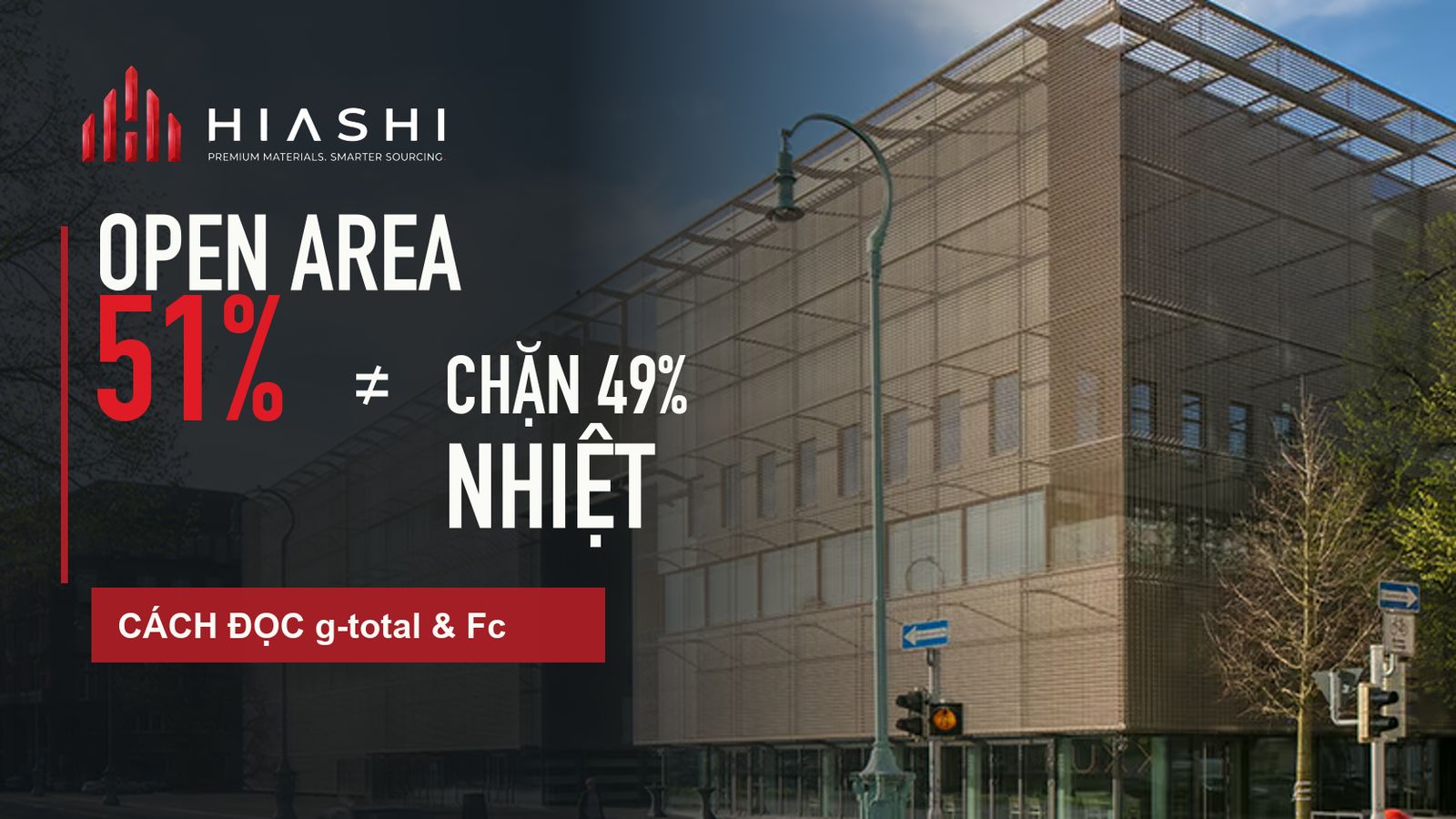
Architectural metal mesh अक्सर moodboard में इसलिए चुना जाता है क्योंकि यह हल्की, अर्ध-पारदर्शी “second skin” बनाता है। जोखिम तब शुरू होता है जब यह विचार BOQ की एक पंक्ति बन जाता है: “stainless-steel mesh, Open Area 50%, solar shading के लिए।”
Open Area एक geometric ratio है। यह रोकी गई solar heat का प्रतिशत नहीं है।
51% खुला mesh अपने-आप 49% solar radiation नहीं रोकता। परिणाम weave geometry, surface reflectance, पीछे के glass, solar angle, facade orientation और दोनों layers की दूरी पर निर्भर है।
Specification review के लिए 60-second answer
- Open Area porosity, airflow और visual transparency बताता है—पूरी solar performance नहीं।
- g-total किसी घोषित glazing + shading assembly से भीतर जाने वाली solar energy बताता है।
- Fc reference glazing के सापेक्ष reduction factor है और test context के बिना अधूरा है।
- Approval से पहले orientation, glazing, daylight/glare targets, wind load, attachments, corrosion resistance और वास्तविक finish/assembly की fire evidence जाँचें।
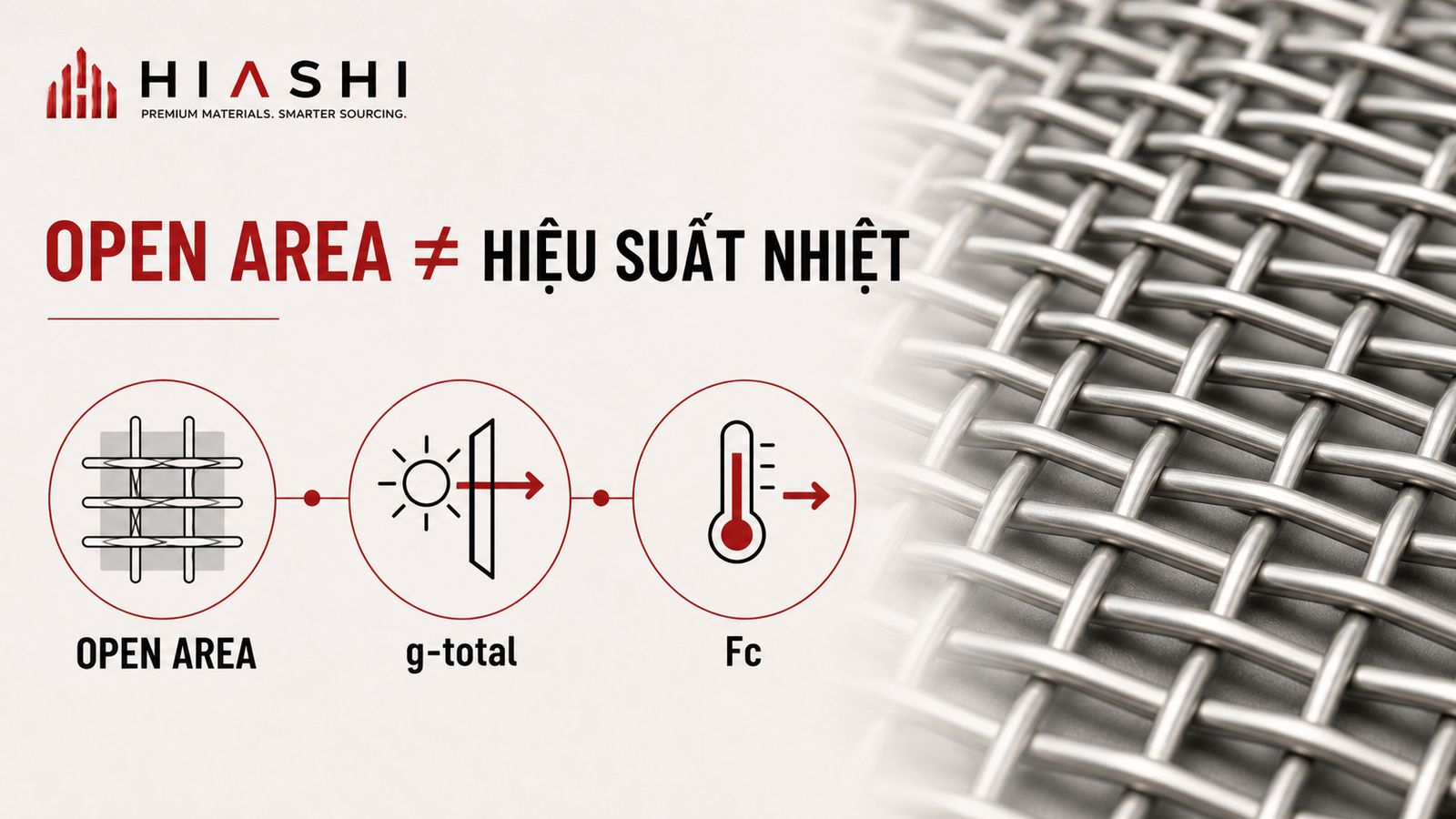
Open Area, g-total और Fc अलग प्रश्नों के उत्तर हैं
Open Area openings और कुल mesh surface का अनुपात है। यह view-through, daylight, ventilation, visual density और wind action को प्रभावित करता है। समान Open Area वाले दो meshes की shading अलग हो सकती है क्योंकि wire section, weave direction, depth और reflectance अलग होते हैं।
g-total परिभाषित assessment में संयुक्त glass और shading device से भीतर जाने वाली solar energy का भाग है। यह mesh अकेले का स्थायी गुण नहीं है; reference glass, sun angle या mounting position बदलने पर परिणाम बदल सकता है।
Fc reference glazing की तुलना में shading device के प्रभाव को व्यक्त करता है। Glass, incidence angle और test method बताए बिना “Fc = 0.5” technical review के लिए पर्याप्त नहीं है।
GKD PC-OMEGA 1520 datasheet को सही पढ़ना
GKD की April 2024 official datasheet में यह data है:
| Parameter | Published value | Specification context |
|---|---|---|
| Material | Stainless steel | Project environment के अनुसार grade/finish जाँचें |
| Open Area | लगभग 51% | केवल geometric porosity |
| Weight | लगभग 5.7 kg/m² | Support और handling design का input |
| Maximum mesh size | 18,000 × 4,000 mm | Project structural checks का विकल्प नहीं |
| g-total | 0.38 | Reference glazing C, EN 14501, 0° incidence |
| Fc | 0.64 | Reference glazing C, EN 14501, 0° incidence |
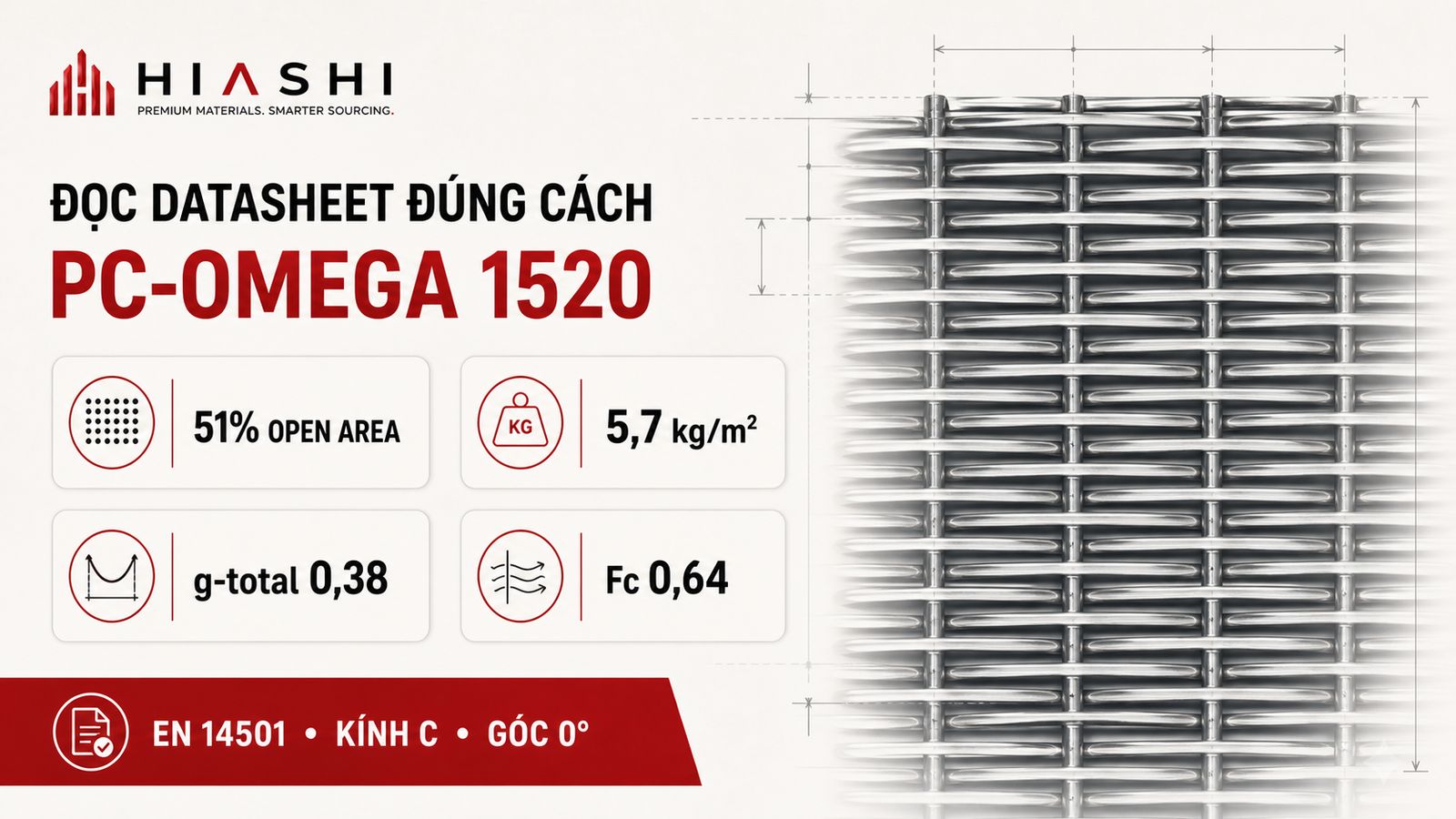
सही निष्कर्ष है: published test configuration में PC-OMEGA 1520 और reference glazing C के assembly का g-total 0.38 तथा Fc 0.64 है, incidence angle 0° पर। यह कहना गलत है कि mesh हर facade पर हमेशा 62% heat रोकता है।
GKD FUTURA 240 एक stainless-steel cabled mesh है, जिसका Open Area 62% है और जिसे facades तथा safety/security applications के लिए प्रस्तुत किया गया है। 62% अधिक porosity दिखाता है, लेकिन यह PC-OMEGA 1520 से बेहतर या खराब shading साबित नहीं करता। समान glass और angle पर तुलना करें या दोनों को एक ही facade model में evaluate करें।
अलग boundary conditions से बने numbers का उपयोग करके दो products की सीधी तुलना न करें।
एक mesh, चार facade orientations
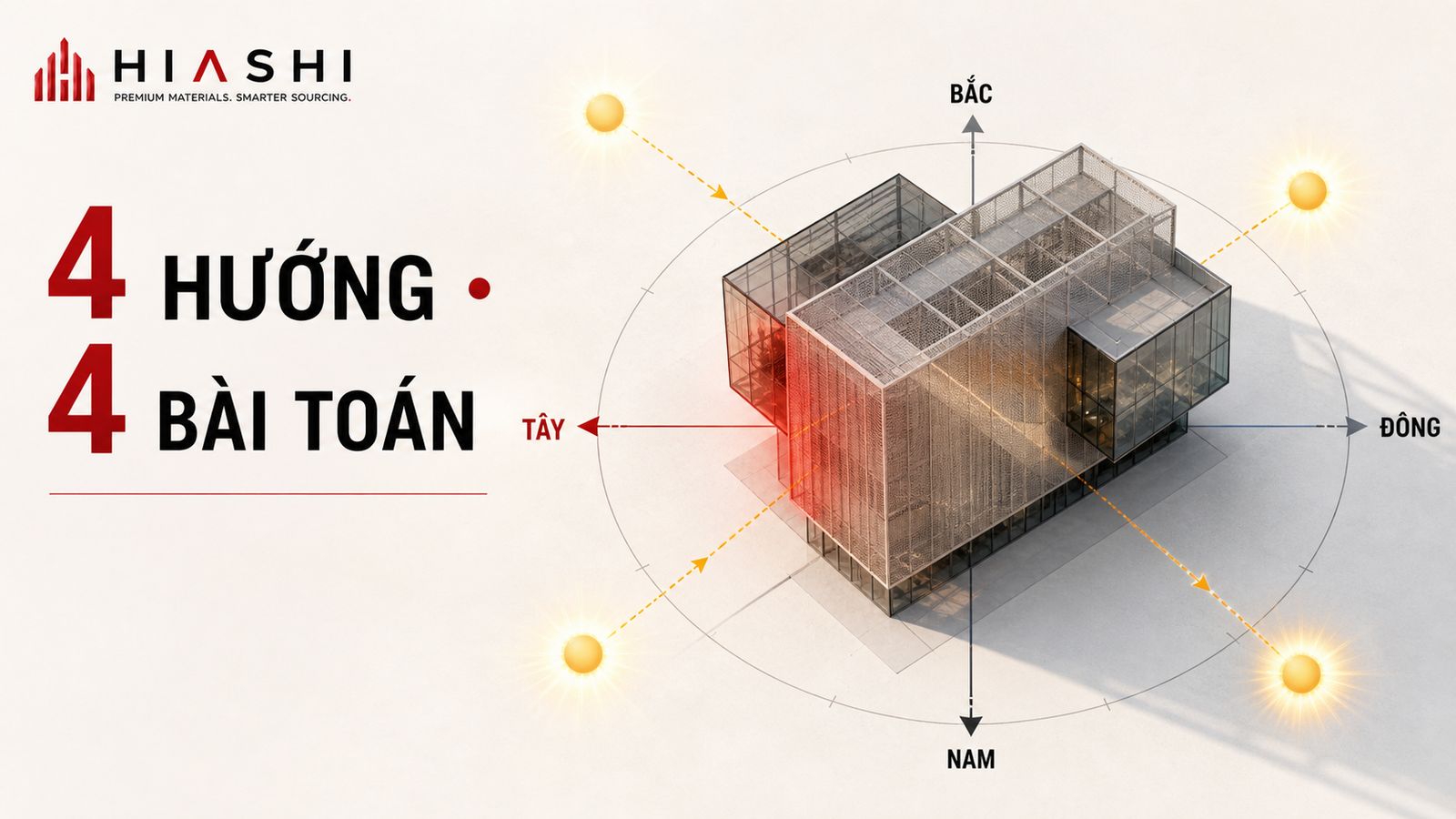
- West और southwest: low afternoon sun के कारण heat और glare control महत्वपूर्ण हैं। वास्तविक mesh + glass g-total, eye-level glare, rear ventilation और cleaning access जाँचें।
- East: morning sun guestrooms, lobby और open offices को प्रभावित कर सकता है। Open Area को अनुमान से घटाने के बजाय shading, daylight और view संतुलित करें।
- South: high sun angle में weave direction और depth उपयोगी self-shading दे सकते हैं। Hourly/seasonal modelling catalogue selection से अधिक भरोसेमंद है।
- North या कम direct-sun facade: अधिक Open Area daylight, ventilation, service screening या fall protection के लिए उपयुक्त हो सकता है।
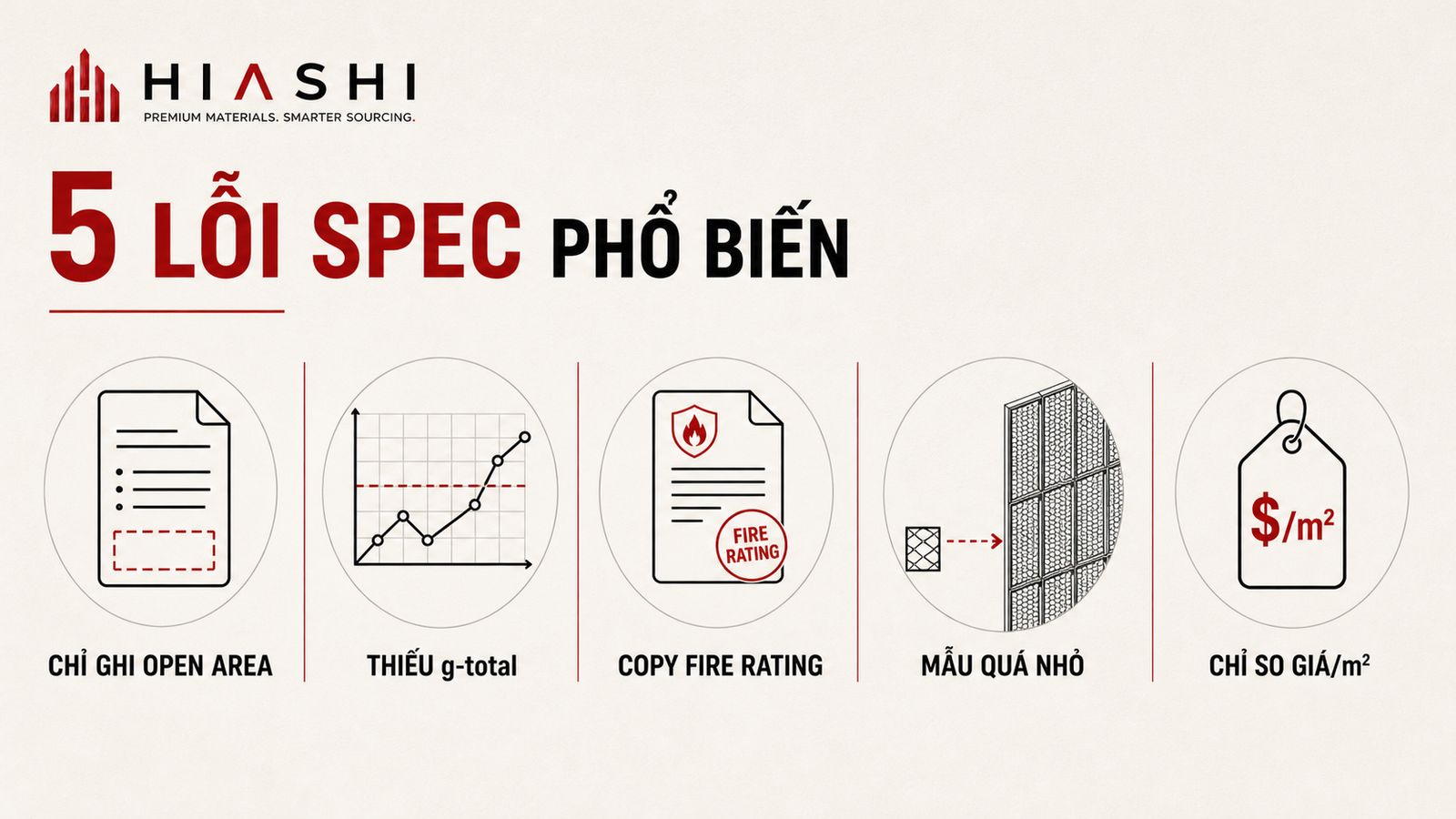
पाँच specification failures
- केवल “316 stainless, 50% Open Area” लिखना—जिससे weave, wire, pitch, mass, tolerance, finish और attachment खुले रह जाते हैं।
- Open Area को thermal data मानना—solar control के लिए contextual g-total/Fc या simulation चाहिए।
- Metal को अपने-आप A1 मानना—material, coating, backing, accessories और complete system सत्यापित करें।
- केवल 300 × 300 mm sample approve करना—यह full-span deflection, moiré, night transparency, reflections, joints और tensioning नहीं दिखाता।
- केवल material price/m² देखना—anchors, pretension, subframe, access और maintenance सहित installed system cost की तुलना करें।
Spec, RFQ और technical submittal के लिए 10-point checklist
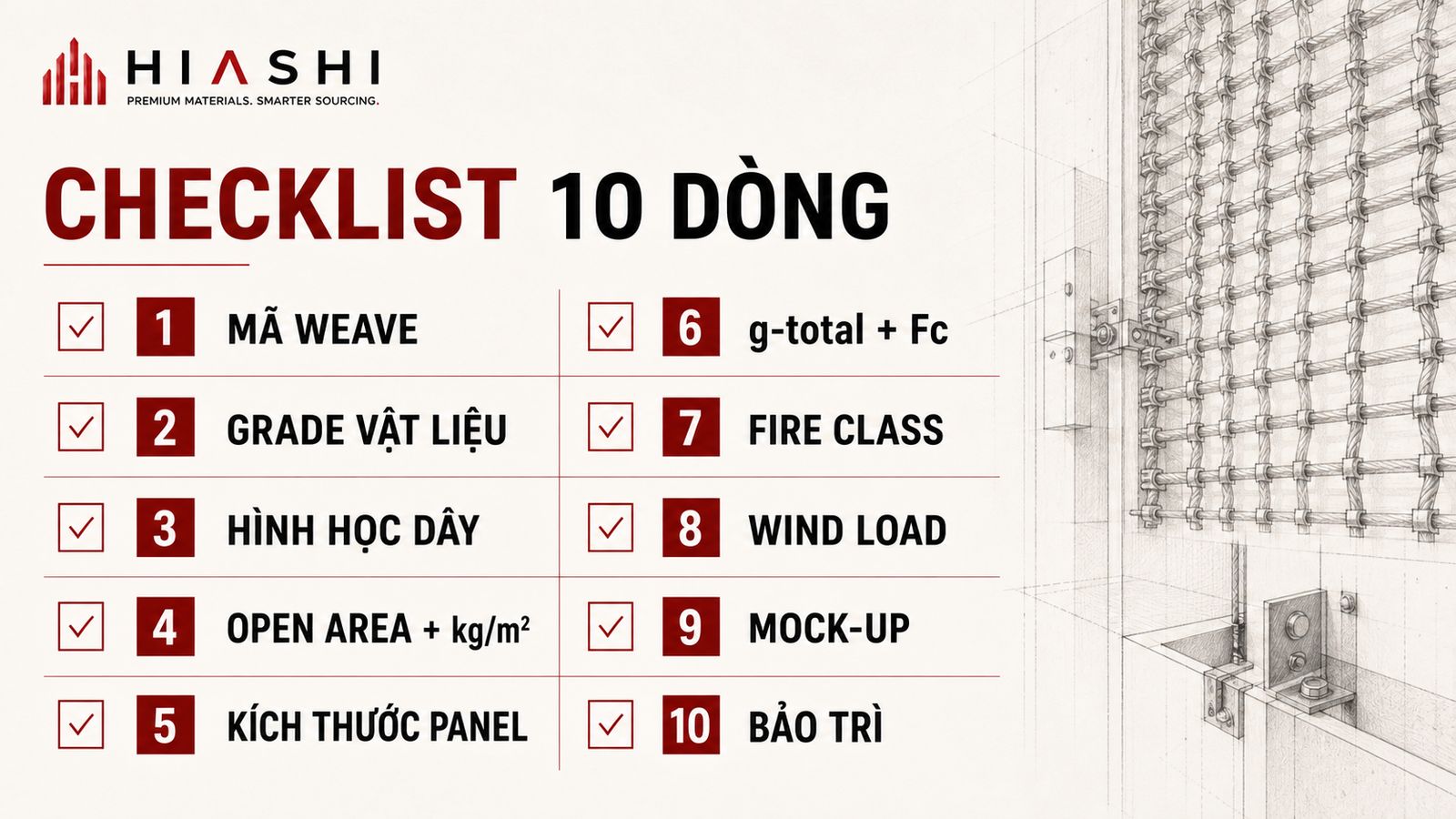
- Manufacturer और exact weave code; 2. material/grade और coastal exposure; 3. warp/weft geometry, pitch और thickness; 4. Open Area और kg/m²; 5. panel size, weave direction और joints; 6. g-total, Fc, glass, incidence angle और standard; 7. actual material + finish + backing की fire classification; 8. design wind pressure, deflection, pretension और attachment calculations; 9. near/far, day/night और internal-view mock-up criteria; 10. cleaning और maintenance access।
यदि points 6–8 अनुपस्थित हैं, तो submission अभी decorative material का वर्णन है—verified facade system का नहीं।
PC-OMEGA 1520, FUTURA 240 या दूसरा weave कब चुनें?
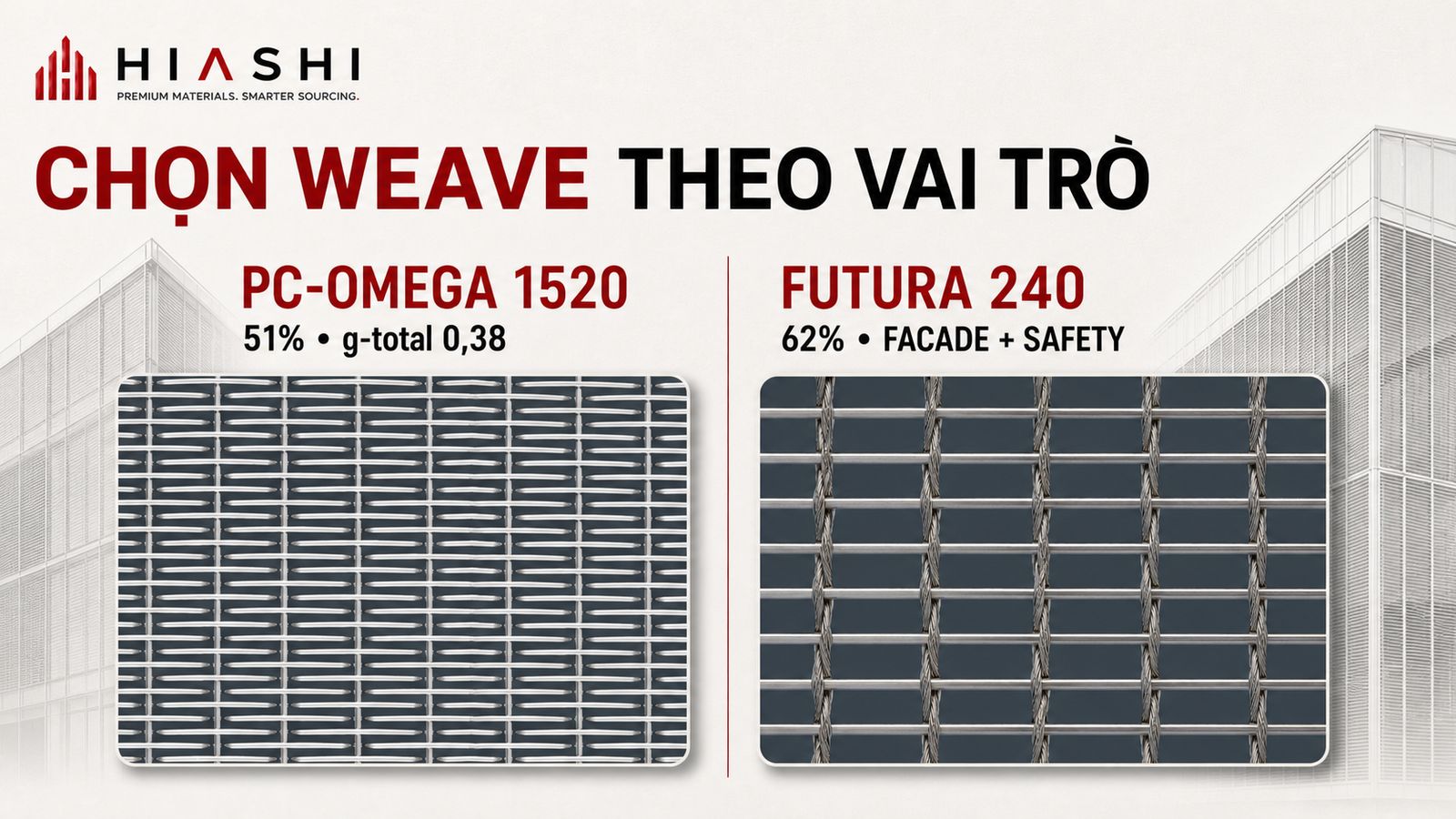
PC-OMEGA 1520 तब shortlist करें जब स्पष्ट reference conditions वाला published solar-control data, rigid stainless-steel mesh और नियंत्रित module geometry महत्वपूर्ण हों। FUTURA 240 तब evaluate करें जब porous cabled mesh, large facade transparency और facade + safety/security role प्राथमिक हों। अलग orientations, special coating, fall protection, media/lighting/acoustics या non-standard modules के लिए custom/other weave बेहतर हो सकता है।
Durable का अर्थ अपने-आप sustainable नहीं है
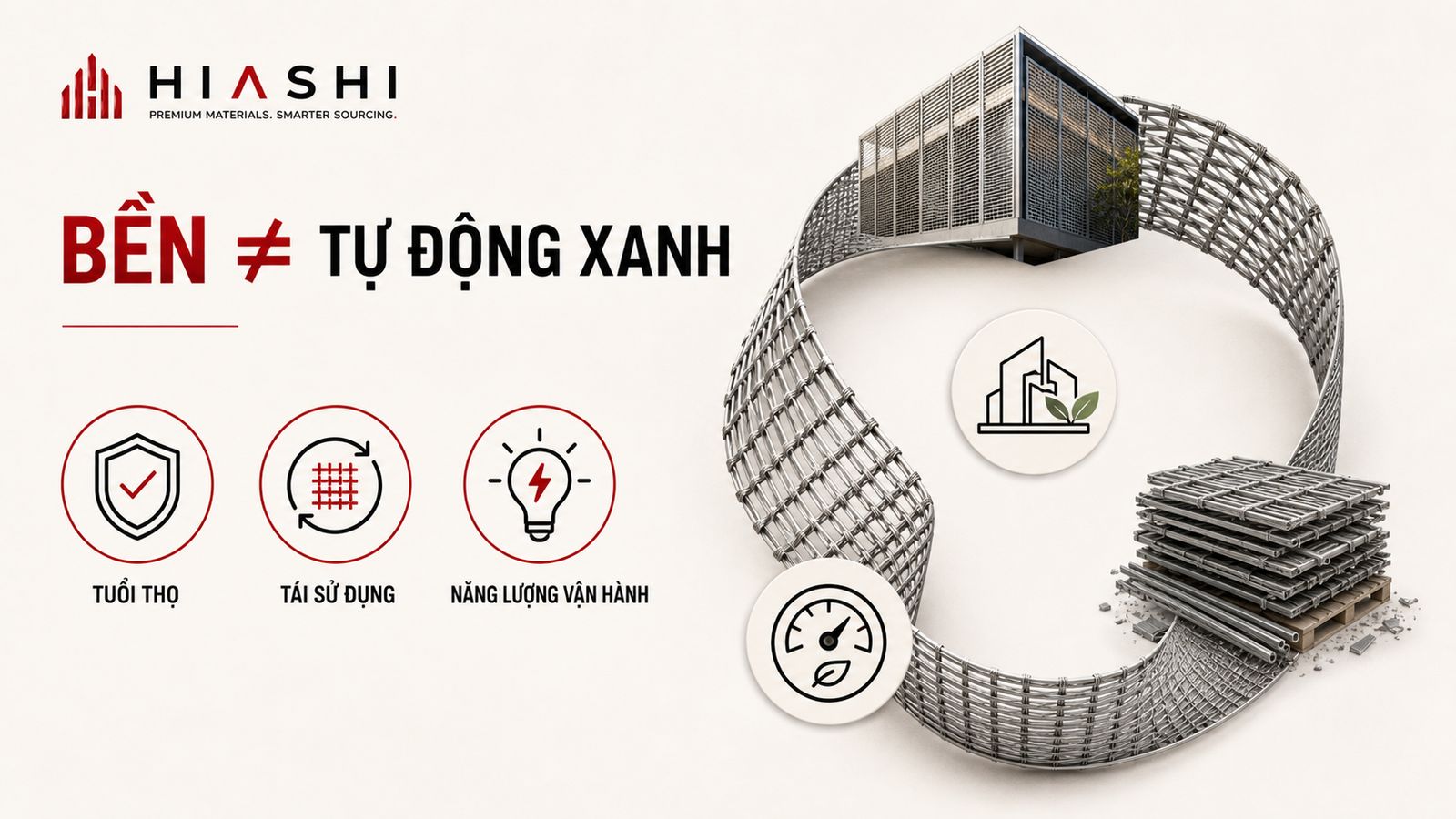
Stainless steel durable और recyclable है, लेकिन ये attributes अकेले sustainable building outcome सिद्ध नहीं करते। Design life, disassembly/reuse, cleaning frequency, documented recycled content, transport impact और whole-building energy modelling जाँचें। LEED या अन्य green-building contribution सही product evidence और project assessment method पर निर्भर है।
निष्कर्ष: porosity से पहले performance specify करें
Metal mesh पहचान, shading, daylight/view, ventilation, service screening और safety में योगदान दे सकता है। ये लाभ तभी मिलते हैं जब specification “316 stainless, Open Area 50%” से आगे जाए।
पहले यह न पूछें कि mesh कितना खुला है। पहले तय करें कि facade assembly को कौन-सी performance चाहिए, फिर weave चुनें।
GKD की official architecture directory में Hiashi JSC Vietnam contact के रूप में सूचीबद्ध है। Initial shortlist के लिए project location/coastal distance, north-marked elevations, proposed glazing, primary role, mesh modules, wind criteria, finish/fire requirements और mock-up programme भेजें।
अक्सर पूछे जाने वाले प्रश्न
Open Area क्या है?
यह कुल mesh surface में openings का प्रतिशत है और porosity, view तथा airflow बताता है—heat rejection नहीं।
क्या 50% Open Area 50% heat रोकता है?
नहीं। Weave geometry, reflectance, orientation, glazing, solar angle और mounting position परिणाम बदलते हैं।
g-total क्या है?
यह घोषित test configuration में glazing और shading assembly से transmitted solar energy का अनुपात है।
Fc और g-total अलग कैसे हैं?
Fc reference glazing के सापेक्ष reduction factor है; g-total combined assembly का परिणाम है।
RFQ में क्या शामिल करें?
Weave, grade, wire geometry, Open Area, mass, panel, solar/fire data, wind, attachments, mock-up और maintenance।
क्या HIASHI GKD projects में सहायता करता है?
हाँ। GKD directory Hiashi JSC को Vietnam में सूचीबद्ध करती है; HIASHI samples, TDS, shortlist और RFQ में सहायता करता है।
प्रमुख तकनीकी स्रोत
Project के लिए material guidance चाहिए?
Technical brief साझा करें; HIASHI material shortlist, samples, TDS और RFQ में सहायता करेगा。