
Spec Guide
Beyond Restroom Partitions: When Does a Project Need Specialty-Grade HPL?
A technical guide comparing HPL, compact laminates, and ASD specialty grades (Superflex, LabCo, Marine, Sphere) for exporters, labs, marine, and facades.

From 0.2 mm Superflex to LabCo, Marine, and Sphere exterior: how architects and export manufacturers select laminates by operating environment rather than generic material labels.
In many regional markets, High-Pressure Laminate (HPL) is primarily associated with toilet partitions: solid-color panels, quick assembly, easy cleaning, and exposed black edges.
Consequently, HPL is frequently pigeonholed as a material restricted to sanitary areas or basic commercial casework—perceived as more expensive than melamine-faced chipboard, overly "industrial," difficult to repair, and unfit for exterior exposure.
This perception is understandable. Certain market panels are indeed engineered strictly for budget-driven interior applications. However, the fundamental issue is that HPL is an entire material family, not a single uniform product.
Under the "laminate" umbrella, one product might be a flexible 0.2 mm decorative veneer supplied in continuous rolls; another is a self-supporting 12 mm solid compact panel; another grade is engineered for chemical laboratory benchtops; another is certified for marine interiors; and another system is developed for rainscreen facade cladding.
What is a grade? In this context, a grade refers to a specific technical formulation or product variant engineered for a defined performance boundary. Grade is not a subjective "good vs. bad" rating. It defines core composition, resin chemistry, thickness, surface treatment, test standards, and application limits.
For instance, interior grade, chemical-resistant grade, marine grade, and exterior grade all belong to the laminate family, but they cannot be interchanged arbitrarily. Determining what a laminate can achieve requires reading the exact Technical Data Sheet (TDS) and test reports for that specific grade.
The material family name identifies the technology. The grade, test assembly, and fabrication methodology dictate actual performance.
Newsletter #27 uses the ASD Laminat portfolio as a technical case study to answer three critical specification questions:
- Why is evaluating HPL based solely on restroom partition experiences inaccurate?
- What specific engineering problems do Superflex, LabCo, WritingBoards, Marine, and Sphere solve?
- What documentation, test reports, and fabrication conditions must export manufacturers verify before integrating a specialty laminate into production?
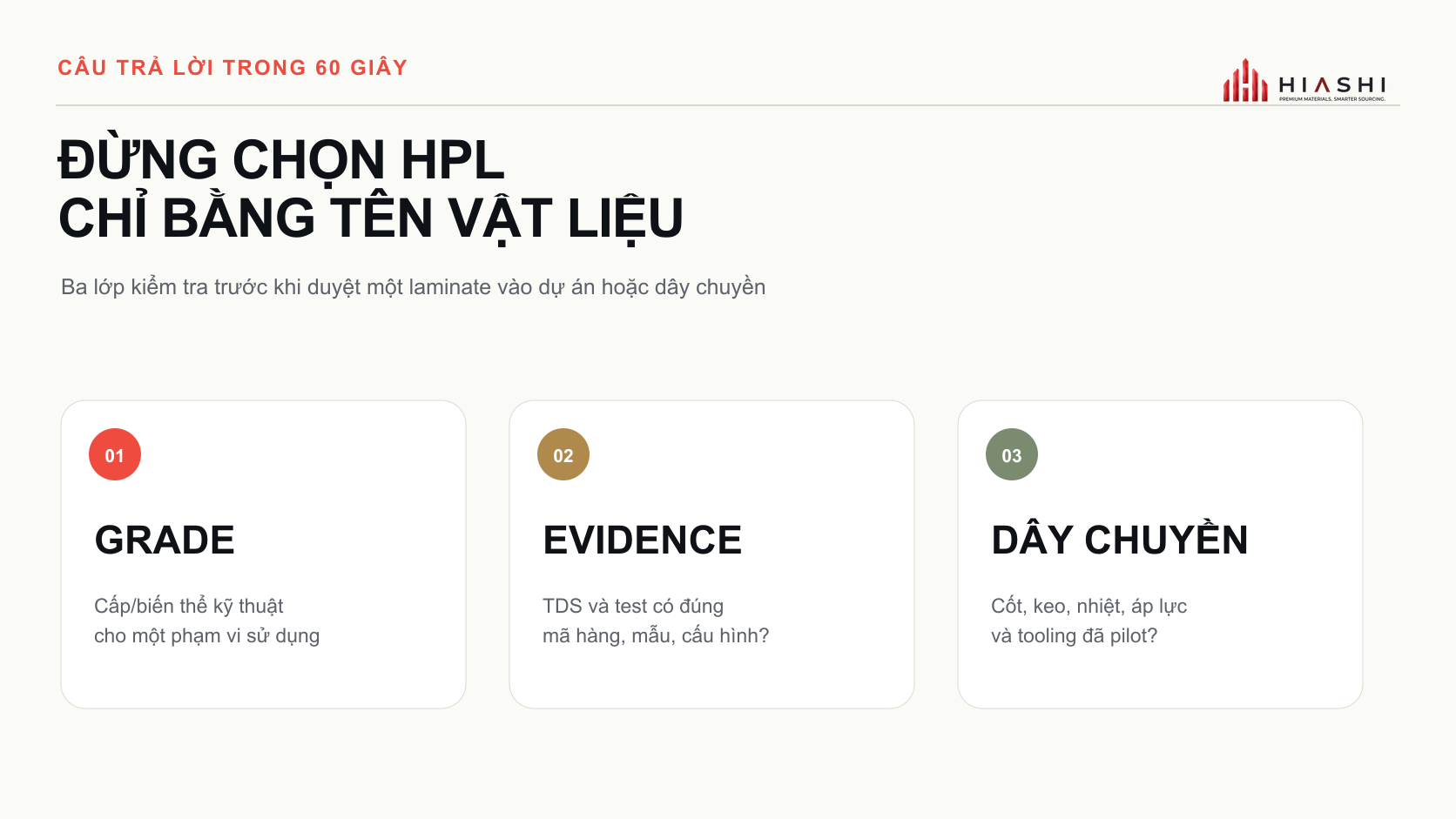
60-Second Summary for Specification Reviewers
- HPL does not equal compact laminate: Decorative HPL is typically a thin veneer requiring a substrate; compact laminate contains multiple kraft layers engineered to function as a self-supporting panel.
- Grade is a technical formulation, not a quality rating: Interior, postforming, chemical-resistant, marine, and exterior grades possess distinct resin formulations, test standards, and exposure limits.
- Durability must be tied to a specific failure mode: Scratch resistance does not prove UV resistance; moisture resistance does not prove exterior weatherability; E1 compliance does not prove compliance with all export market emission limits.
- Company-level certificates do not replace project-specific test reports: ISO covers management systems; FSC Chain of Custody covers supply chain custody; test reports validate specific tested specimens and assemblies.
- For manufacturers, material suitability requires line compatibility: Core substrates, adhesives, temperature profiles, line pressure, roll grain direction, tooling, and minimum radii must be validated via pilot trials.
- Do not compare raw sheet unit costs: Compare the total cost of a fully compliant finished component: raw material + scrap rate + processing steps + rework + compliance documentation + rejection risk at export ports.
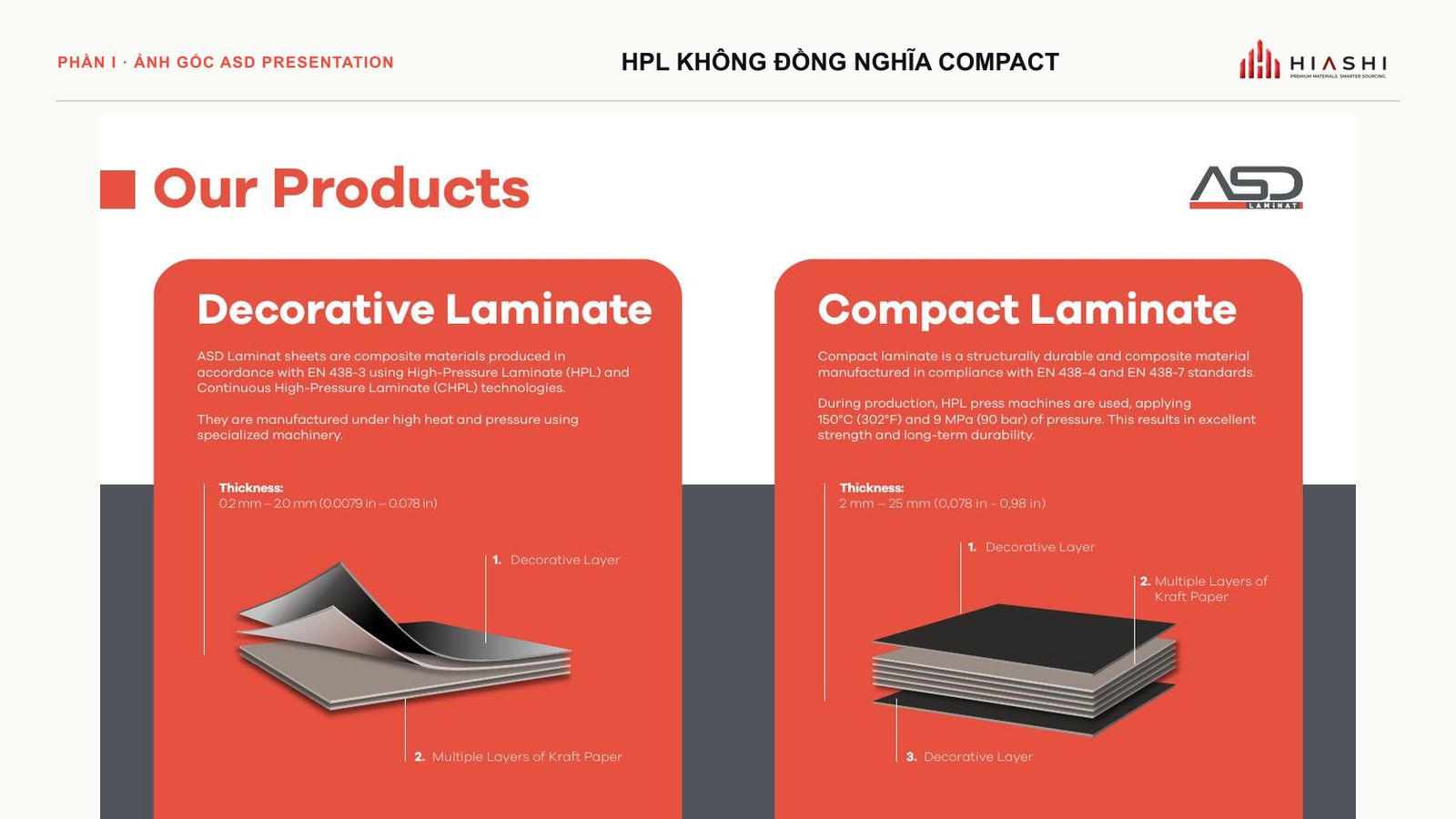 Editorial note: The presentation slide displays 0.2–20 mm for Decorative Laminate, while 0.078 in equates to approximately 2.0 mm. Article text references 0.2–2.0 mm pending manufacturer clarification.
PART I — HPL AND COMPACT LAMINATE DIFFER AT THE COMPONENT LEVEL
Decorative HPL is a Surface Overlay
High-Pressure Laminate (HPL) consists of decorative papers and phenolic-impregnated kraft papers consolidated under high heat and pressure. Thin decorative laminates function as overlays requiring bonding to structural substrates such as MDF, HDF, particleboard, plywood, or composite cores.
ASD presents decorative laminates within a 0.2–2.0 mm thickness range under EN 438-3. In practical applications, final performance depends heavily on the complete assembly:
- Substrate planarity, dimensional stability, and moisture resistance;
- Adhesive compatibility with both laminate backing and substrate;
- Balanced backer lamination to prevent panel warping;
- Edge sealing, joint treatment, and moisture protection;
- Orientation (vertical vs. high-wear horizontal surfaces).
Compact Laminate is a Structural Panel
Compact laminate incorporates additional kraft layers to produce a dense, homogeneous, self-supporting panel. ASD supplies compact laminates from 2 mm to 25 mm under EN 438-4 and EN 438-7.
While compact panels are widely specified for toilet partitions, lockers, lab tables, and wet areas, "compact" merely describes the panel structure. It does not automatically guarantee:
- Laboratory chemical resistance;
- Exterior UV weathering resistance;
- Specific reaction-to-fire classifications;
- IMO marine fire safety approvals;
- Dry-erase or magnetic surface functionality;
- Exterior facade warranties.
Restroom Partitions are a Valid Application — But Incomplete Examples
Sanitary partitions represent a logical compact laminate application due to moisture exposure, cleaning frequency, and modular fabrication. However, using basic partition sheets to judge all HPL is equivalent to inspecting window glass and concluding all glass products share identical properties.
Evaluators must reframe the inquiry from "Is this HPL?" to:
Which specific grade is this, tested under which standards, on which specimen assembly, for which environmental exposure?
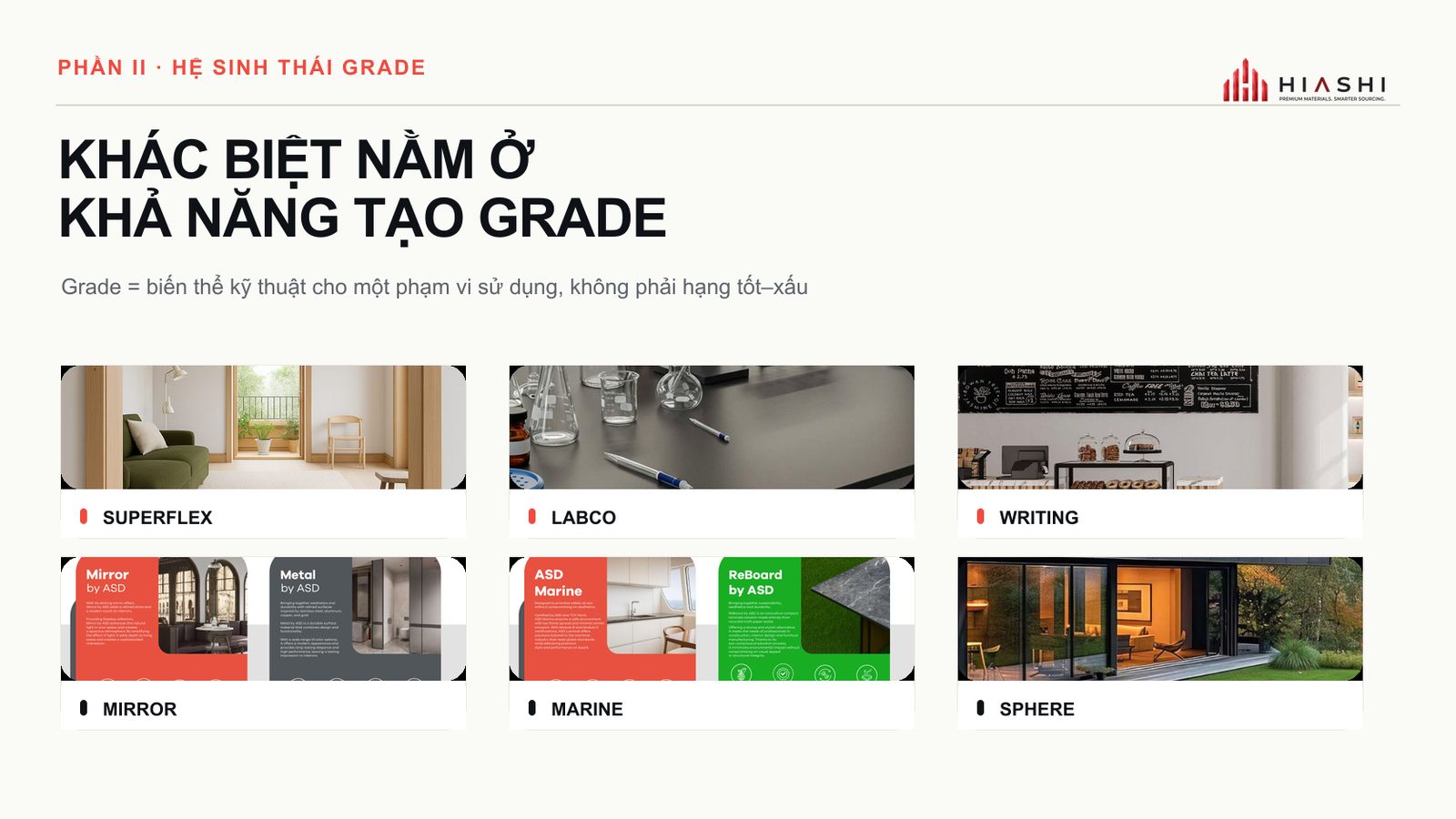
PART II — WHAT DISTINGUISHES A LAMINATE MANUFACTURER IS GRADE CREATION
Extensive product catalogs alone do not guarantee performance. The critical factor is how precisely a manufacturer controls material variables and documents performance for specific configurations.
ASD's 2025 presentation reports:
- Eight impregnation lines controlling decor and kraft resin saturation;
- Seven HPL press lines;
- Four C-HPL continuous press lines for flexible roll lengths;
- In-house formaldehyde and synthetic resin synthesis plants;
- An 80,000 m² manufacturing facility in Düzce, Türkiye;
- An annual production capacity of 40 million m²;
- Over 700 employees exporting to 85+ countries.
Vertical integration enables control over resin formulations, saturation ratios, volatile content, surface finish consistency, and batch-to-batch repeatability across major product families:
ASD Classics
Decorative HPL, C-HPL, and compact laminate for general interior joinery, furniture, doors, and wall linings.
Interior Solutions
Superflex, LabCo, Carbon, UniCore, MultiCore, AluCore, Mirror, Metal, WritingBoards, Marine, and Digital laminates.
Exterior Solutions
Sphere by ASD exterior compact panels for rainscreen facades and outdoor cladding.
Value lies not in product names, but in connecting each trade name to valid Technical Data Sheets (TDS), standards, dimensions, grades, test reports, and fabrication manuals.
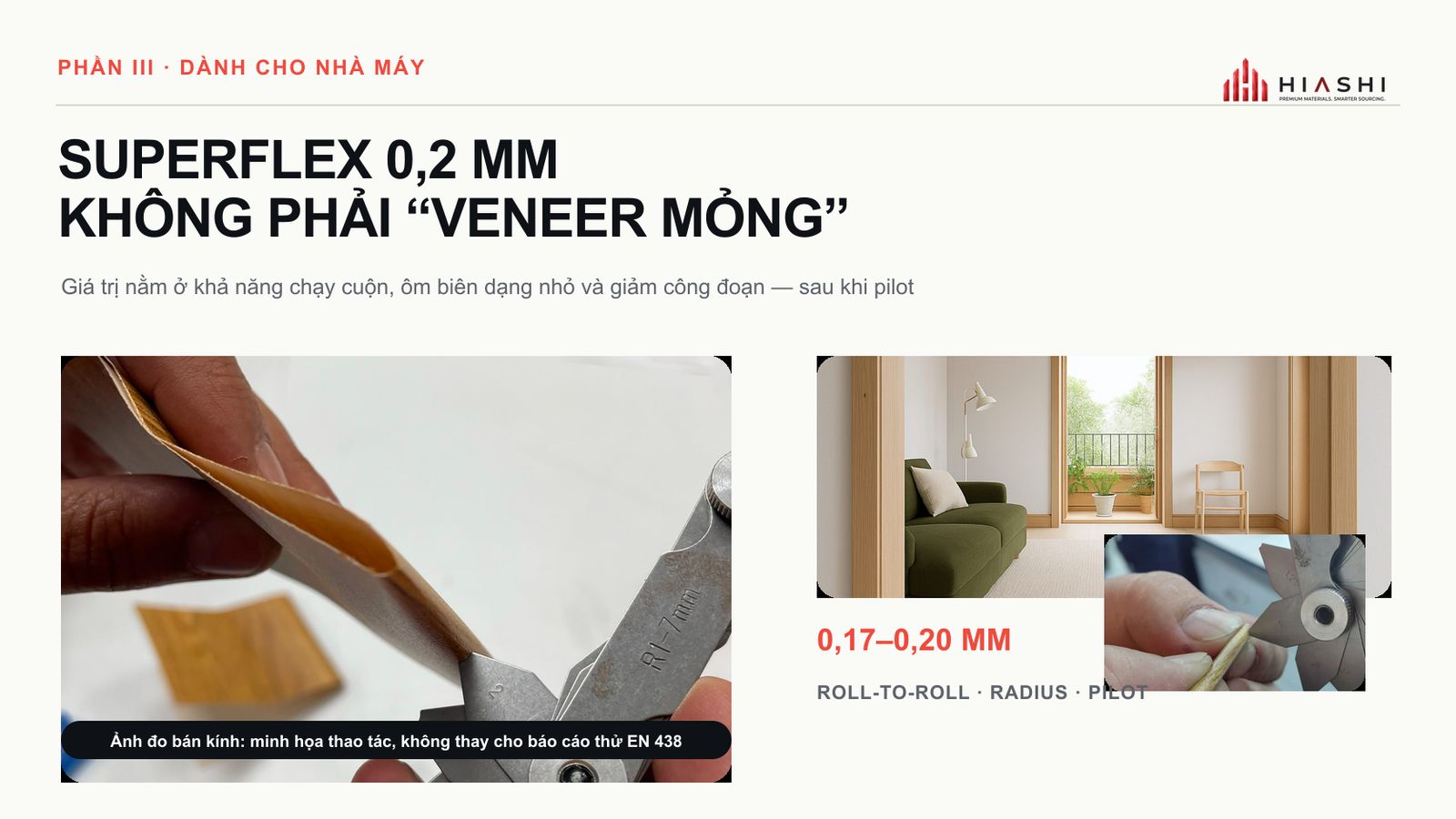
PART III — SUPERFLEX 0.2 MM: FLEXIBILITY IS VALUABLE ONLY WHEN PRODUCTION LINES CAN EXPLOIT IT
Superflex demonstrates how products within the laminate family solve entirely different engineering problems than compact panels.
ASD specifies Superflex at 0.17–0.20 mm thickness, 1,300 or 1,400 mm widths, custom roll lengths, supplied exclusively in rolls. The manufacturer utilizes three distinct resin formulations and a two-stage impregnation process controlling resin content, moisture, and line speed to achieve extreme flexibility.
0.2 mm Does Not Mean "Processable on Any Press"
Superflex is best evaluated by manufacturers operating:
- Continuous roll-to-panel lamination lines;
- Calender or rotary presses;
- Automated postforming lines;
- Profile wrapping machinery;
- Precision adhesive spreading equipment;
- Automated edge trimming systems;
- High-volume production lines capable of utilizing roll feeds.
If a plant only operates flat batch presses for discrete sheets, Superflex can still function as a thin veneer, but the primary economic advantages of continuous roll feeding and extreme postforming may remain underutilized.
For vacuum membrane presses, manufacturers must not assume Superflex behaves like PVC or PET thermoforming foils. Cured resin laminates and thermoplastic foils exhibit fundamentally different deformation mechanics. Written confirmation from ASD is required for specific press models, adhesives, thermal cycles, and part geometries.
Bending Radii Must Account for Grain Orientation
Current TDS data references formability under EN 438-2.31/32:
- Longitudinal direction (parallel to fiber): Minimum radius ≤ 10× nominal thickness;
- Transverse direction (perpendicular to fiber): Minimum radius ≤ 20× nominal thickness.
Applied to a 0.2 mm nominal thickness, these laboratory test thresholds equal 2 mm and 4 mm radii respectively. These figures represent standardized test results rather than universal production guarantees for all decors and machinery setups.
Plant managers must run pilot trials using project-specific core materials, adhesives, feed speeds, and grain orientations, inspecting for surface micro-cracking, whitening, telegraphing, edge lifting, and springback.
The Economic Question is Not "Sheet Price Per Square Meter"
Production teams must evaluate:
- First-pass yield rates;
- Scrap rates across curved profiles;
- Production line speed;
- Adhesive consumption;
- Reduction of manual sanding and edge-finishing steps;
- Rework costs;
- Finished unit cost of fully compliant components.
Superflex offers high value when automated lines produce consistent curved surfaces with matching woodgrain decors. Natural wood veneers retain their market position where real timber, grain variation, and hand-finishing are explicitly required.
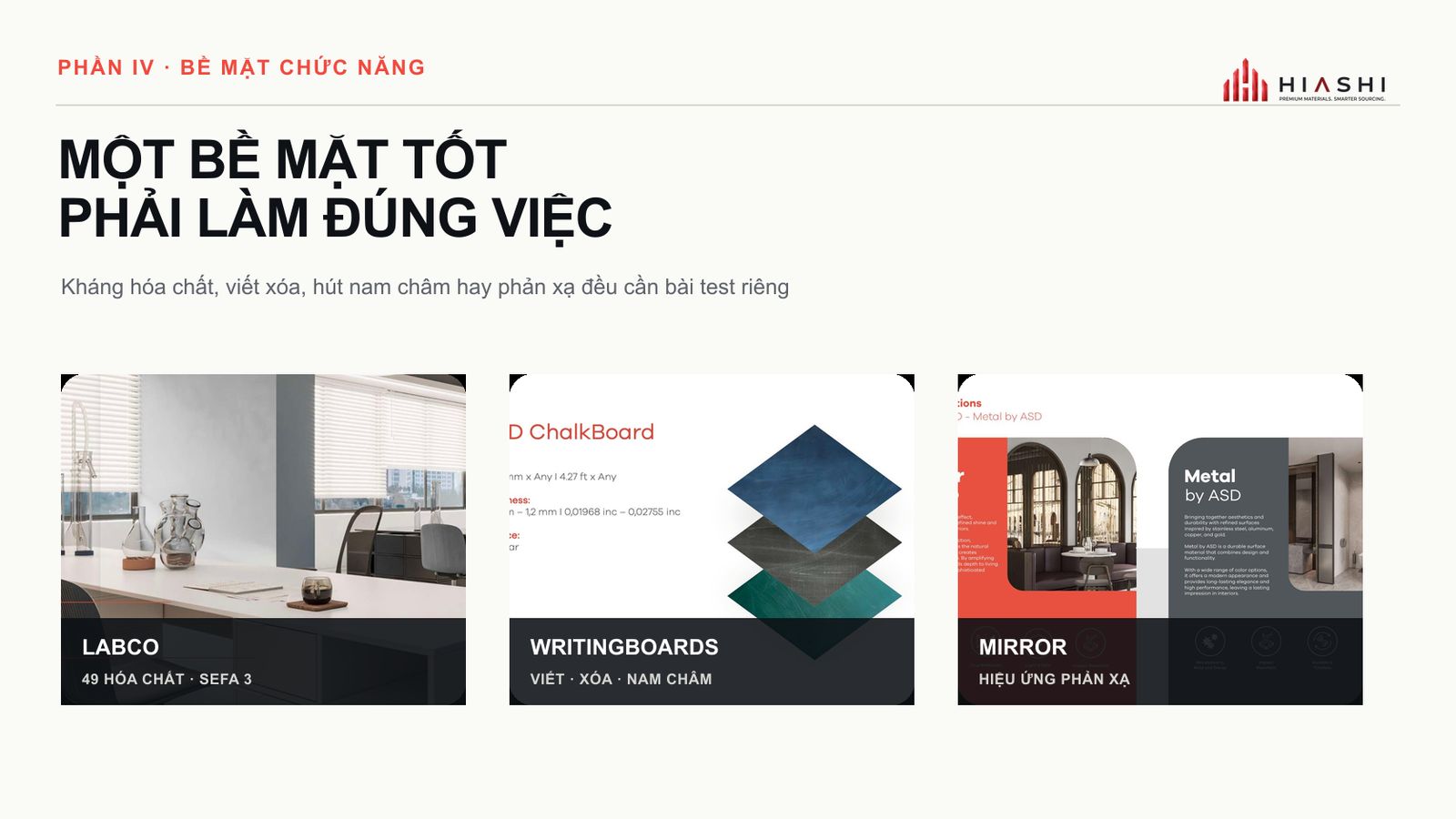
PART IV — LABCO, MIRROR, AND WRITINGBOARDS: SURFACES MUST PERFORM SPECIFIC DUTIES
LabCo: "Chemical Resistant" Requires Chemical Schedules and Acceptance Criteria
LabCo is formulated for laboratory benchtops, R&D centers, healthcare facilities, and commercial kitchens requiring frequent decontamination and chemical exposure.
LabCo technical literature documents surface testing against 49 chemical agents spanning acids, bases, biological stains, halogens, organic solvents, and salts. TDS rev. 22/05/2025 references SEFA 3-2020 Section 2.1, requiring test results not exceeding Level 3 exposure limits across four conditions.
Generic claims like "chemical resistant" are insufficient for specification. Specifiers must request:
- Full list of 49 tested chemical reagents and concentrations;
- Exposure durations and test temperatures;
- Post-exposure cleaning protocols;
- Allowable thresholds for discoloration, gloss change, blistering, or surface etching;
- Test reports matching the exact decor code and sheet thickness.
LabCo should not be assumed resistant to all chemicals. Diagnostic labs, pathology units, industrial kitchens, and semiconductor facilities maintain distinct chemical schedules.
Mirror: Reflective Effects Do Not Equal Glass Mirror Substitution
Mirror by ASD provides a reflective metallic laminate surface for interior accents. Its key advantages include light weight, standard joinery fabrication, and elimination of glass breakage risks.
Before replacing glass mirrors in architectural specs, project teams must verify:
- Image distortion at actual viewing distances;
- Substrate planarity requirements;
- Surface scratch resistance;
- Approved cleaning agents and methods;
- Joint alignment tolerances;
- Project optical reflection requirements.
WhiteBoard, ChalkBoard, and MagneticBoard: Functional Surfaces with Specific Processing Needs
ASD WhiteBoard features a non-porous surface engineered for dry-erase markers. ChalkBoard is textured for traditional chalk. MagneticBoard embeds a metallic foil layer to attract magnets.
TDS documentation for MagneticBoard highlights critical processing requirements:
- Pre-testing magnet strength against target accessories;
- Special safety protocols for metal dust and sparks during cutting/routing;
- Requirement for carbide or diamond-tipped tooling;
- Controlled indoor climate storage to prevent delamination;
- Edge protection following trimming.
These products demonstrate how functional surface features alter processing rules and shop safety protocols.
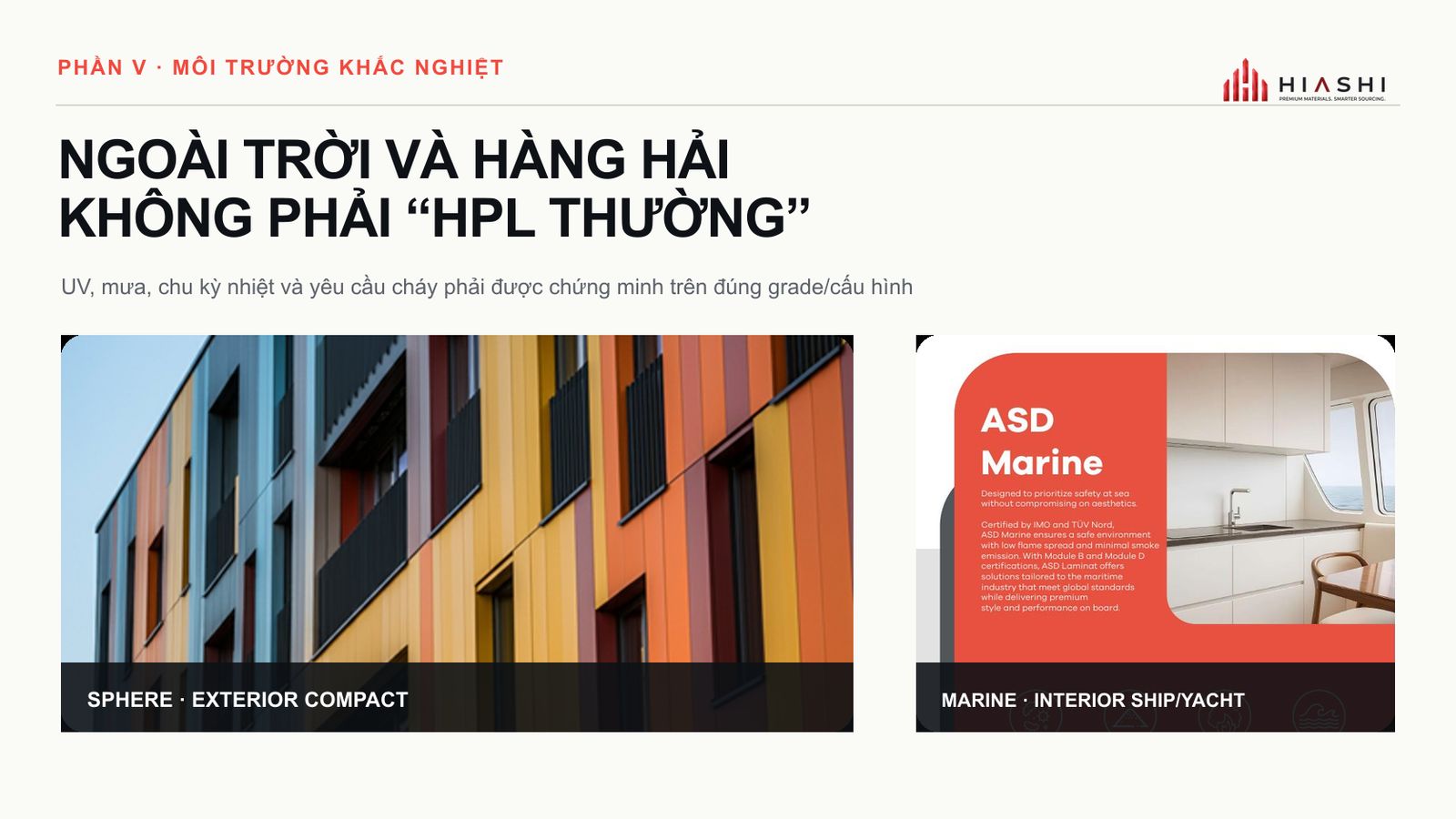
PART V — SPHERE AND MARINE: MOISTURE RESISTANCE IS INSUFFICIENT FOR EXTREME ENVIRONMENTS
Sphere by ASD: Exterior Panels Must Be Specified as Complete Facade Systems
Water-resistant interior compact laminate cannot be repurposed as exterior cladding. Outdoor elevations introduce UV radiation, wind loads, thermal cycling, rain, ventilation requirements, subframe movement, and strict fire regulations.
ASD Exterior TDS documentation defines exterior grades (EGF, EDF) under EN 438-6, citing mandatory test standards:
- Resistance to climatic shock under EN 438-2.19;
- UV resistance after 1,500 hours under EN 438-2.28;
- Artificial weathering under EN 438-2.29;
- Wet conditions, dimensional stability, impact resistance, and flexural strength;
- Reaction to fire classifications up to B-s2,d0 for compliant thicknesses (≥6 mm).
Fire ratings such as B-s2,d0 must not be applied universally across all exterior sheets; specifications must cite exact grade codes, panel thicknesses, and valid test reports.
The Sphere installation manual details critical system parameters:
- Panel acclimatization prior to fabrication and mounting;
- Expansion joint gaps;
- Fastener spacing tables based on panel thickness;
- Tooling requirements (TCT/PCD blades);
- Approved fixing systems (rivets, structural adhesive, concealed mechanical anchors);
- Continuous cavity ventilation and drainage flashing details.
High-grade exterior panels installed without proper ventilation or expansion allowances remain vulnerable to system failure.
ASD Marine: Maritime Environments Require Certified Marine Grades
ASD technical documentation identifies Marine Grade as a 0.8 mm laminate engineered specifically for boat, yacht, and vessel interiors, backed by IMO approvals and TÜV Nord certification (Module B and Module D certificates).
This certification does not mean all ASD laminates are approved for maritime installation. Marine joinery plants must confirm:
- Exact Marine Grade specification (0.8 mm);
- Certified decor ranges;
- Active certificate validity dates;
- IMO Module B type examination and Module D production quality tracking;
- Substrate, adhesive, and backer compliance with certified assemblies;
- Specific flag state and classification society requirements.
Extreme operating environments require verified supply chain traceability rather than brand assertions.
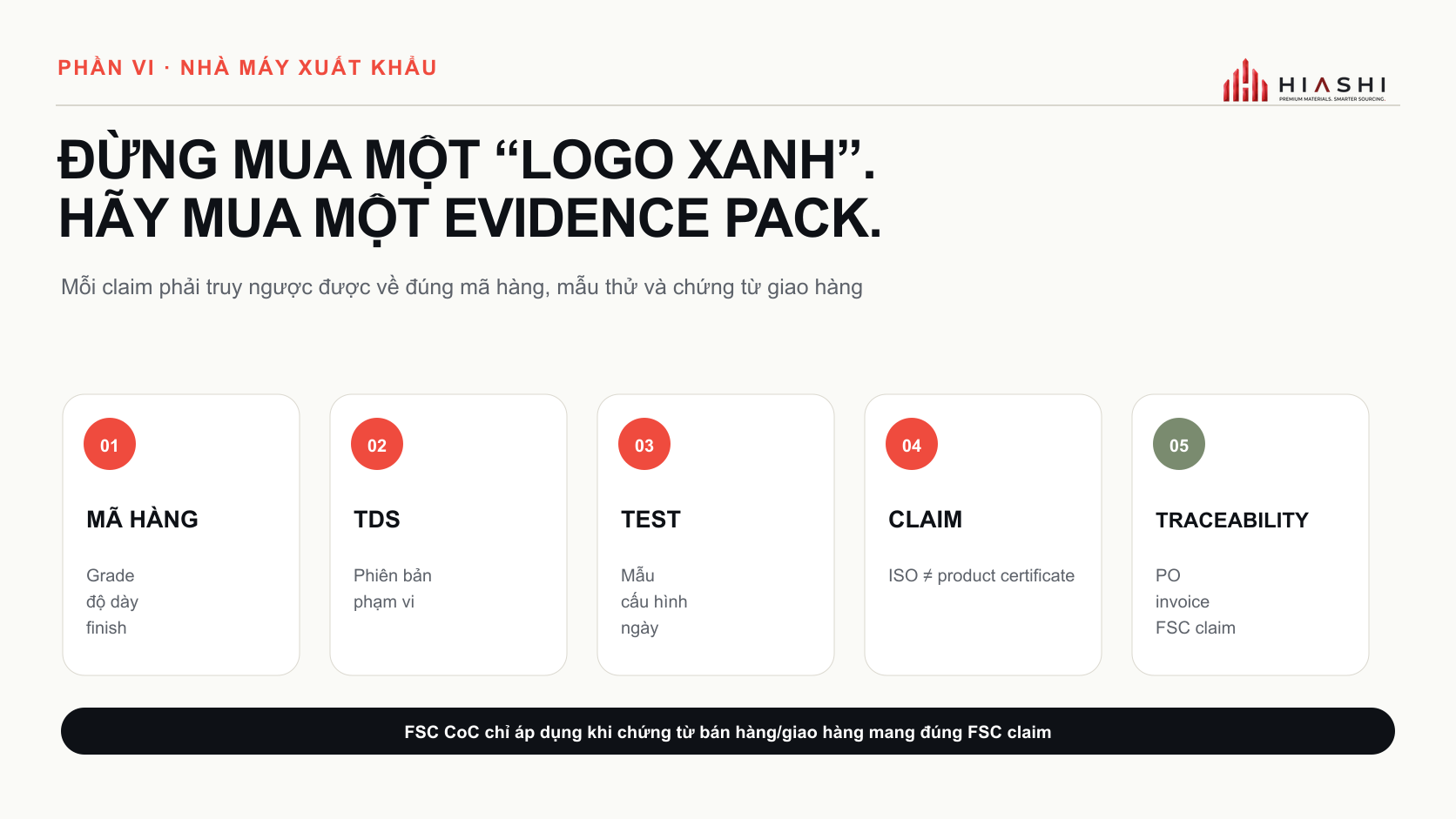
PART VI — EXPORT MANUFACTURERS REQUIRE AN "EVIDENCE PACK," NOT A LOGO PAGE
ASD documentation references international standards: ISO 9001, ISO 14001, ISO 45001, ISO 50001, ISO 27001, FSC Chain of Custody, CE, TS EN 438, ISEGA, IMO, SEFA, and test reports covering VOCs, formaldehyde emissions, fire ratings, REACH/SVHC, PAH, and PFAS.
A list of certifications is meaningful only when buyers understand what each document validates.
ISO Covers Management Systems, Not Product Performance
ISO 9001 and ISO 14001 certify quality and environmental management systems. They do not prove that a specific panel batch satisfies chemical resistance, fire safety, or UV weathering standards.
FSC Chain of Custody Requires Claim Documentation on Invoices
ASD holds FSC Chain of Custody certification (valid through 04/10/2027) covering FSC Mix and FSC Controlled Wood purchasing, processing, and distribution under a credit system.
The certificate explicitly states that products are only FSC-certified when the appropriate FSC claim appears on commercial sales invoices and shipping documents. Marketing logos do not constitute supply chain proof.
VOC Test Reports Must Match Product Codes and Destination Regulations
Eurofins report 392-2016-00260201_A_EN evaluates a specific laminate sample against French VOC, AgBB, Belgian regulations, Indoor Air Comfort, and EN 717-1 standards.
Export manufacturers servicing current projects should request:
- Current test report revisions;
- Matching product family and thickness;
- Substrate/assembly testing where required by destination codes;
- Approved test protocols for the target export country;
- Formal licensing rights if label usage is required on finished goods.
Minimum Evidence Pack Checklist for Export Submittals
- Product Identification: Manufacturer legal name, decor code, grade, finish, thickness, and production site.
- Technical Data Sheet (TDS): Revision date, standard references, test methods, units, and specified values.
- Certificate Scope: Certification body, certificate number, validity period, and covered product lines.
- Test Reports: Matching tested specimen, date, test setup, and formal conclusions.
- Chain of Custody Claims: FSC claims on quotations, order confirmations, and delivery notes.
- Chemical Declarations: REACH/SVHC, PAH, PFAS, or regional chemical compliance statements.
- Pilot Fabrication Sign-Off: Verified substrate, adhesive, edge finish, and visual acceptance mock-ups.
- Traceability Records: Batch numbers, packing lists, retention samples, and non-conformity procedures.
Export buyers do not purchase a brand with many logos. They purchase a traceable chain of evidence linked to specific delivered batches.
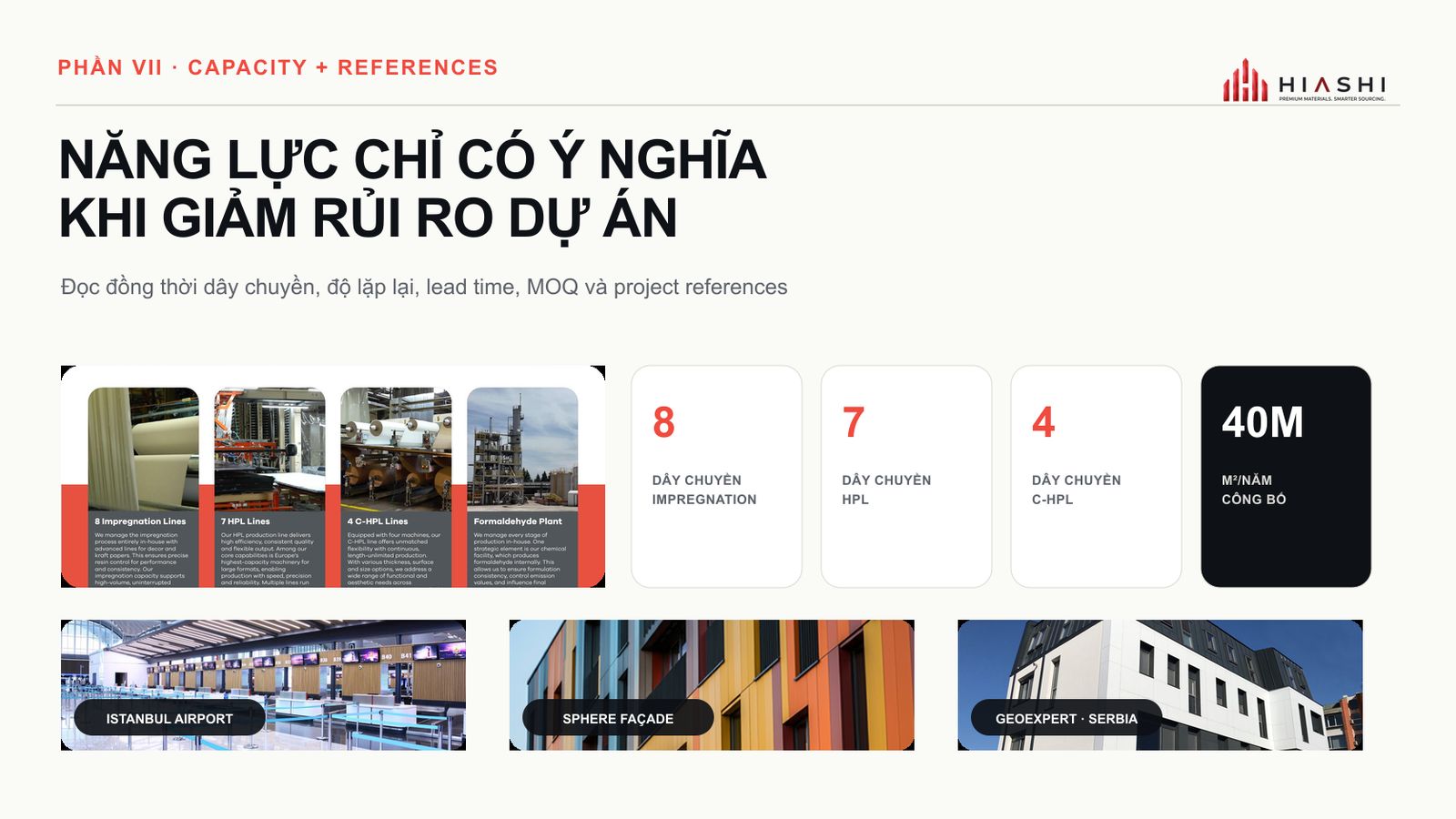
PART VII — MANUFACTURING CAPACITY ONLY REDUCES PROJECT RISK WHEN PROPERLY LEVERAGED
ASD's 2025 presentation reports an annual capacity of 40 million m², exports to 85+ countries, 1,000+ corporate clients, 650+ decors, 45+ surface textures, and 25+ product lines.
Earlier literature cites 35 million m² capacity and fewer press lines. These differences reflect facility expansion (addition of a 7th HPL press line in 2024 and a 4th C-HPL line in 2025). Vendor assessments should cite source dates rather than blending data from different catalog revisions.
What Scale Provides to Factories and Projects
- Capacity for large-volume orders and repeatable decor runs;
- Multiple sheet sizes, thicknesses, and grades from a single supplier;
- Capability to supply both sheet and continuous roll formats;
- Centralized technical data and certification libraries;
- Global distribution and technical support networks;
- Structured sample, mock-up, and replacement logistics.
Scale does not eliminate project-level requirements regarding Minimum Order Quantities (MOQs), lead times, color batch tolerances, or local buffer stock. Large facilities may be unsuited for small custom orders requiring immediate delivery.
Project References Must Be Evaluated Correctly
ASD references major international developments including Istanbul Airport, Galataport Istanbul, Galerija Belgrade, Stade du Sénégal, Istanbul Finance Center, Everest Residential Complex, and the Verdi Project.
Reference lists demonstrate manufacturer involvement in high-traffic, commercial, exterior, and interior developments. However, references do not replace project test reports, nor do they prove that a grade specified for Project A is suitable for Project B.
When reviewing references, verify:
- Exact product line and grade installed;
- Application area and total surface volume;
- Substrate, adhesive, or fixing system used;
- Completion date and operating conditions;
- Field performance history and maintenance records.
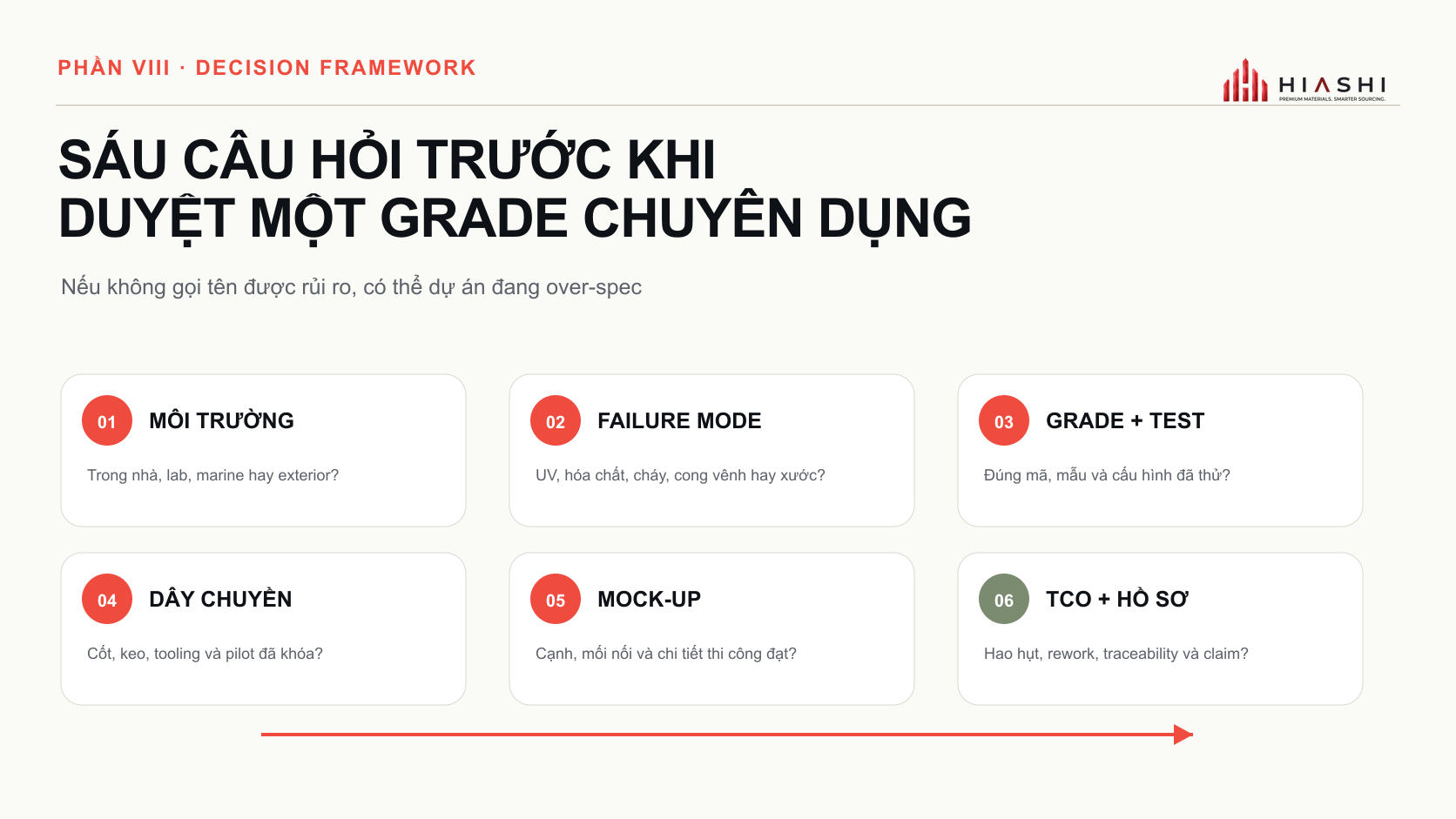
PART VIII — SPECIALTY HPL SELECTION FRAMEWORK FOR ARCHITECTS AND FACTORIES
Specify ASD Classics or Standard HPL/C-HPL When:
- Target application is standard interior furniture, wall lining, door skins, or cabinetry;
- Core substrate and adhesive lamination are managed in-house;
- Special chemical, marine, or exterior performance is not required;
- Selected decor, finish, wear, and stain resistance satisfy the design brief;
- Material cost and local availability outweigh specialized functional features.
Evaluate Superflex 0.2 mm When:
- Components feature tight bending radii or complex profile wrapping;
- The plant operates continuous roll-feeding or automated postforming machinery;
- Production volume justifies roll-format material handling;
- Adhesives, core materials, grain direction, and radii are validated via pilot runs;
- Application is vertical or decorative rather than heavy-duty horizontal work surfaces.
Evaluate LabCo When:
- Project brief includes a specific chemical exposure schedule;
- SEFA 3-2020 or equivalent laboratory standards are mandated;
- Surfaces undergo frequent decontamination with harsh cleaning agents;
- Chemical reagents, concentrations, contact times, and visual limits are defined;
- Submitted samples and test reports match target decors and thicknesses.
Evaluate WritingBoards, Mirror, or MagneticBoard When:
- Dry-erase, chalk, magnetic attachment, or mirror reflection is explicitly required;
- Fabrication teams understand metal foil core processing requirements;
- Cutting tools, dust extraction, spark safety, and edge sealing are planned;
- Full-scale mock-ups validate visual appearance and functional performance.
Evaluate ASD Marine When:
- Component specifications require 0.8 mm Marine Grade under active IMO certificates;
- Panel assembly aligns with certified Type Examination configurations;
- Project defines flag state, classification society, and fire/smoke requirements;
- Full batch traceability is maintained from purchase order to installed joinery.
Evaluate Sphere Exterior Panels When:
- Application is an exterior ventilated rainscreen facade or outdoor cladding;
- Grade (EGF/EDF), thickness, and fire classifications are specified;
- Wind loads, subframe engineering, fixing methods, and cavity ventilation are detailed;
- Fabrication teams utilize carbide/diamond tooling and proper edge treatment;
- Site mock-ups validate joint details, corner trims, and window terminations.
When Should Specialty Grades Be Avoided?
- When design briefs do not require specialized functional performance;
- When factory machinery is incompatible with processing requirements;
- When test reports do not match specified product codes;
- When MOQs or lead times compromise project schedules;
- When installation crews lack experience with engineered mounting systems;
- When standard interior laminates meet requirements at lower overall cost.
Specialty grades are cost-effective when they eliminate a real technical failure mode. Without a defined failure mode, a project risks over-specification.
CONCLUSION
HPL does not become a premium material simply through increased thickness, European origin, or certification logos.
Real value is created when a manufacturer controls resin chemistry, engineers purpose-built grades, publishes transparent data, maintains supply chain traceability, and provides clear fabrication guidance.
ASD demonstrates that laminate technology extends far beyond basic restroom partitions: Superflex for curved profile wrapping, LabCo for chemical labs, WritingBoards for interactive surfaces, Marine for vessel interiors, and Sphere for ventilated exterior facades.
However, no grade is appropriate simply because it bears a brand name.
Do not ask "Is HPL durable?" Ask "Which grade is proven for which failure mode, and which production line can process it correctly?"
HIASHI assists architects, contractors, and export manufacturers across Vietnam in shortlisting grades, auditing TDS data, preparing samples, running pilot trials, and coordinating RFQs with ASD Laminat.
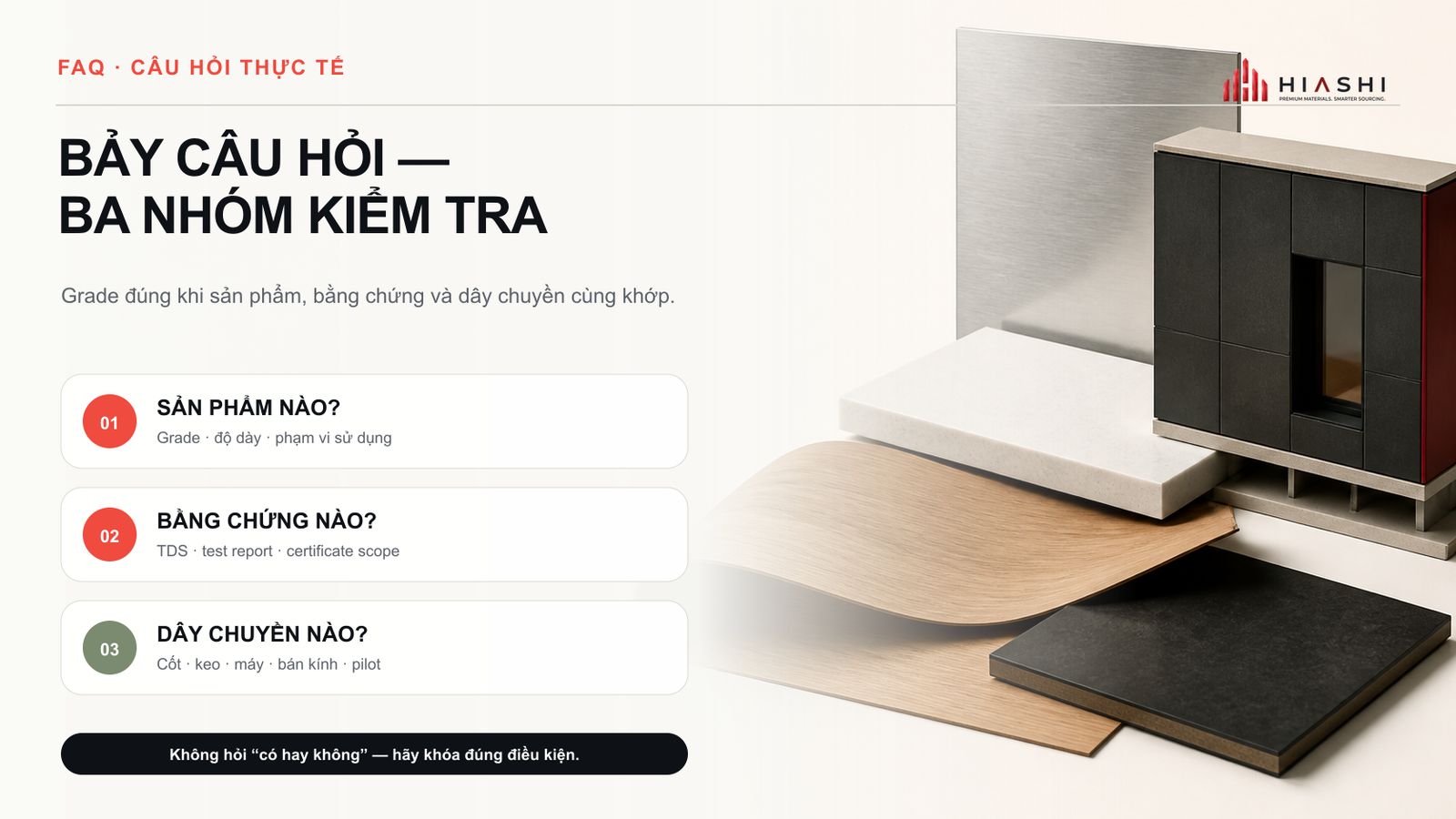
To Request a Preliminary Technical Recommendation, Provide 8 Parameters:
- Application: Furniture, doors, laboratory, whiteboard, marine, or exterior facade.
- Environment: Interior dry, wet area, chemical lab, outdoor, marine, or high-traffic.
- Substrate: MDF, HDF, particleboard, plywood, metal, or self-supporting compact.
- Machinery: Flat press, roller line, postforming, profile wrapper, CNC, or membrane press.
- Geometry: Sheet dimensions, thickness, bending radius, edge details, and CNC cutouts.
- Performance Needs: Wear resistance, chemical schedule, fire class, UV, VOC, or magnetic.
- Export Market: Target country, mandatory building codes, and required certifications.
- Volume & Schedule: MOQ, forecast, sample requirements, pilot schedule, and delivery target.
👉 Submit sample, TDS, or RFQ inquiries at /en/brands/asd-laminat.
FAQ — SPECIFICATION & EXPORT AUDIT
How does specialty-grade HPL differ from standard compact laminate?
Specialty-grade HPL alters resin formulation, surface treatment, or structural core to satisfy specific failure modes like tight postforming, SEFA chemical resistance, dry-erase, magnetic hold, marine fire safety, or exterior UV weathering. Standard compact laminate simply indicates a self-supporting core.
Can 0.2 mm Superflex laminate be processed using vacuum membrane presses?
Do not assume compatibility. Superflex is a roll-format resin-cured laminate, not a PVC/PET thermoforming foil. Compatibility depends on press type, temperature, adhesive, and part geometry. Technical confirmation and pilot trials are mandatory.
Does LabCo resist every industrial chemical?
No. ASD certifies LabCo against 49 specific agents under SEFA 3-2020 Section 2.1. Specifications must verify chemical concentration, exposure time, temperature, and visual acceptance criteria against project-specific chemical schedules.
Can interior compact laminate be used outdoors if kept dry?
No. Water resistance does not prove UV resistance, artificial weathering durability, climatic shock tolerance, or wind-load subframe compatibility. Exterior facades require dedicated exterior grades like Sphere under EN 438-6.
Does ASD Marine certification cover all ASD decors and panel thicknesses?
No. Marine is a dedicated 0.8 mm grade certified under IMO Module B and D. Buyers must verify that specific decors, thicknesses, substrates, and adhesives fall within the certified scope rather than extrapolating IMO approvals universally.
Does a manufacturer FSC certificate guarantee every delivered shipment is FSC certified?
No. FSC Chain of Custody grants the facility authority to supply certified products. Shipments are only FSC-certified when the mandatory FSC claim appears explicitly on sales invoices and delivery documents.
What technical data should export furniture manufacturers provide for grade selection?
Provide target application, substrate type, press line configuration, adhesive chemistry, bending radius, production volume, decor codes, target export market, and mandatory regulatory standards.
PRIMARY REFERENCES
- ASD Laminat Introduction Presentation, 2025 Edition.
- ASD Superflex Collection and ASD Superflex Technical Data Sheet.
- LabCo by ASD Collection, TDS Rev. 22/05/2025.
- ASD WritingBoards Collection, TDS Rev. 22/05/2025.
- ASD Exterior Technical Data Sheet and Sphere Application Standards.
- ASD Marine Grade — https://www.asdlaminat.com/asdcollections/asdlaminate/grades/marine-grade/
- ASD Downloads — https://www.asdlaminat.com/downloads
- FSC Chain of Custody Certificate INT-COC-007029 / INT-CW-007029, valid through 04/10/2027.
- Eurofins VOC Test Report 392-2016-00260201_A_EN, issued 08/08/2016.
- HIASHI ASD brand page — https://hiashi.vn/brands/asd-laminat
Need material guidance for a project?
Share the technical brief so HIASHI can support material shortlisting, samples, TDS and RFQ preparation.